DECATUR – Decatur Industrial Electric is pleased to announce the promotion of Landon Baine. 
For the past 14 years, Landon has served as the company’s service specialist and IT coordinator.
“Landon earned this position as his technical ability, coupled with his dedication of service excellence for our customers, is second to none. His individual accomplishments and teamwork made him a perfect fit,” said Trent Thompson, president of Decatur Industrial Electric. “He is always striving to learn something new and driving continuous improvement.”
In his new role, Landon will be responsible for the performance of the inside sales customer service and logistics’ team members.
Greg Ferris previously served in this position and will be retiring from Decatur Industrial Electric in 2018 after more than two decades of service.
Decatur Industrial Electric is a strategic partner in reliability solutions to customers throughout the Midwest and has been providing electrical and mechanical equipment solutions for over 65 years.
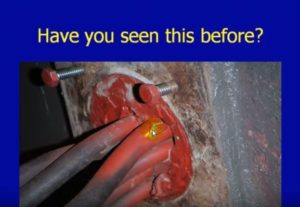 resistive imbalance it can be caused by the circuit and/or the windings. To find the “real” imbalance of the motor windings take another test at the motor terminals, thus eliminating the circuit. If the imbalance is in fact caused by the windings, then it will show up as a higher imbalance than when tested from the MCC. For example, a test from the MCC with three resistance readings of .1700, .1600, and .1755 will give us a 5.2% imbalance. After taking a perfectly balanced cable run out of the measurement, and testing from the motor leads, we would get .0700, .0600, and .0750 which will give us a 12.2%.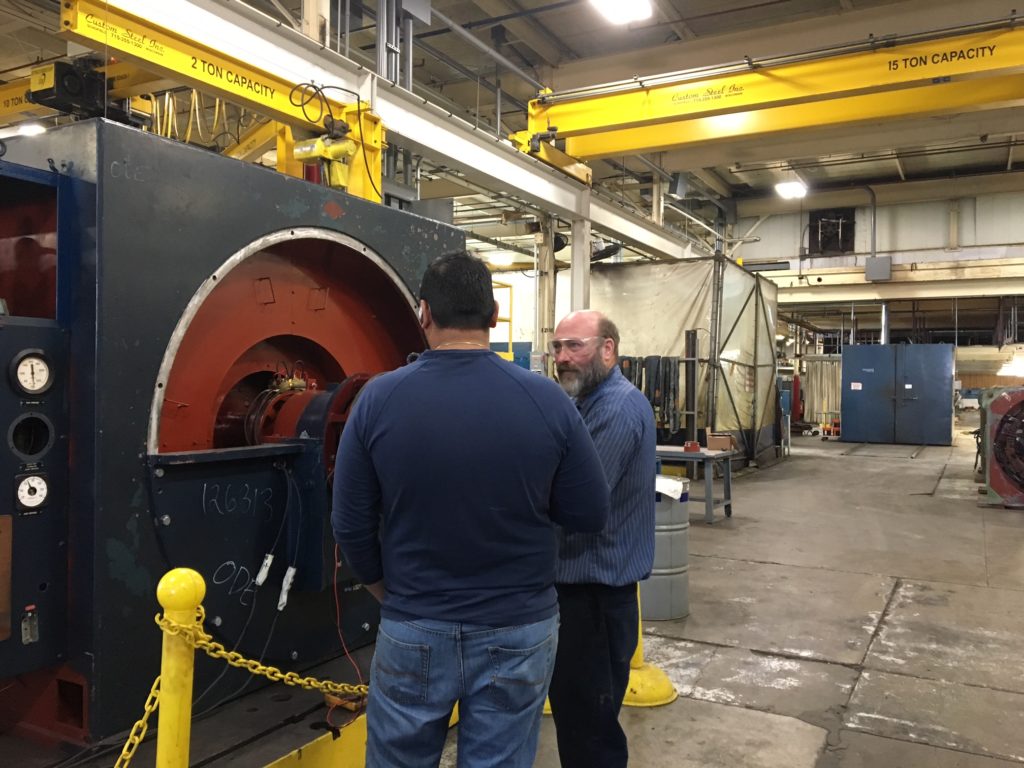

 You have heard us many times discussing the effectiveness of an In-Rush/Start-Up test as a critical piece of information in assessing a variety of potential anomalies in components such as the stator, rotor, power, and load. Capturing the In-Rush/Start-Up during the start of an electric motor allows the capture of data when the motor is under extreme stress and more likely to expose anomalies.