• About
    • Our Team
    • Location
    • Industry Case Studies
    • Mission & Values
    • Corporate Responsibility
    • Vendor Management
    • History
    • Contact
  • Industries
    • Agribusiness
    • Food & Beverage
    • Metals & Steel
    • Mining, Aggregate, & Concrete
    • Oil & Gas
    • Paper
    • Power Generation & Energy
    • Water & Wastewater
    • Wind Services
  • Products
    • Type
    • Manufacturers
    • Asset Management Program
  • Generators
  • Remanufacture
    • Electrical Repairs
    • Mechanical Repairs
    • Machining
  • Field Services
    • All Services
    • Installation and Commissioning
    • Overhead Crane & Hoist Services
    • Wireless Equipment Condition Monitoring IoT
    • Predictive & Preventative
      • Vibration Analysis
      • On-Site Electrical Testing
      • Large AC and DC Motor PM and Repair
      • Gear Reducers
      • Precision Laser Alignment
  • Asset Management
    • Asset Management Program
    • Transport & Logistics
  • Careers
  • Login

Decatur Industrial Electric

Contact Us

Service & Quotes: 217-428-6621

You are here: Home / Archives for General News

Tech Tip: Frequently Asked Nameplate Questions

Challenged by the conversion of kW to hp for estimates and quotes? To help, I posted the following in the service center: The conversion formula for kW to hp is arrived at by multiplying the kW x (1.341) = hp (1/1.341 = 0.746; to convert hp to kW, multiply hp times 0.746 = kW). (Example: 15 x 1.341 = 20.115) This post allows my employees to easily cross-reference to our pricing charts.

Another similar experience is when we have discussed RPMs vs. frequency. Utilizing RPM = (120 x Hz)/poles OR poles = (120 x Hz)/RPM. (Example: (120 x 50 Hz)/1500 RPM = 4 poles).

Copyright: EASA

Jacob Voorhies
Technical Education Committee Member
Mid Kansas Winding
Galva, Kansas 
 

Filed Under: General News

Taking the Mystery Out of Electric Motors: Stator Analysis and Troubleshooting

When PdMA refers to the Stator Fault Zone in an electric motor, it is referring to the dielectric properties of the insulation preventing current flow between turns, coils, and phases. It’s important to remember that when an insulation short occurs between turns, coils, or phases that the motor is at the lower part of the PF curve and life expectancy may be short. This is why we stress that the goal of predictive/condition-based maintenance technology is to identify conditions conducive to these shorts and fix the condition to ward off a reduced life expectancy.

A variety of root causes should be considered when trying to get ahead of these faults. The following are some potential root causes to consider when identifying conducive environments:

  • Overload – Excessive Heat
  • High Resistance Connection – Circulating Currents
  • External Contamination – Moisture/Conductive Material Intrusion
  • Design Flaw – Wrong Turns/Inverted Coil – Electrical Imbalance
  • Environment – Excessive Ambient/Chemical Attack
  • Excessive Vibration – Excessive Friction Between Turns or Coils
  • Excessive Starts/Hour – Heating
  • Particle Impingement- Rotor Bar, Lamination, Fan Blade, Cooling Slot Separator

Stator fault analysis can be easily performed with the motor running or de-energized (tripped) through Impedance, Voltage and Current, Inductance, and Winding Resistance. Early identification of conducive environments will include additional tests like Resistance-to-Ground, Rotor Influence Checks, Rotor Evaluation Current Signature, In-Rush/Start-Up, Airgap, and Machine Train Analysis.

To see a detailed discussion about Stator Analysis and Troubleshooting view the Stator Tips – Todd and Noah Podcast.  https://www.youtube.com/watch?v=lS3s27ofsSs

Source: https://pdma.com/category/tips/

Filed Under: General News

Do you know what Unplanned Downtime Costs YOUR facility?

Early Identification of Bearing Failure Saves Company Thousands

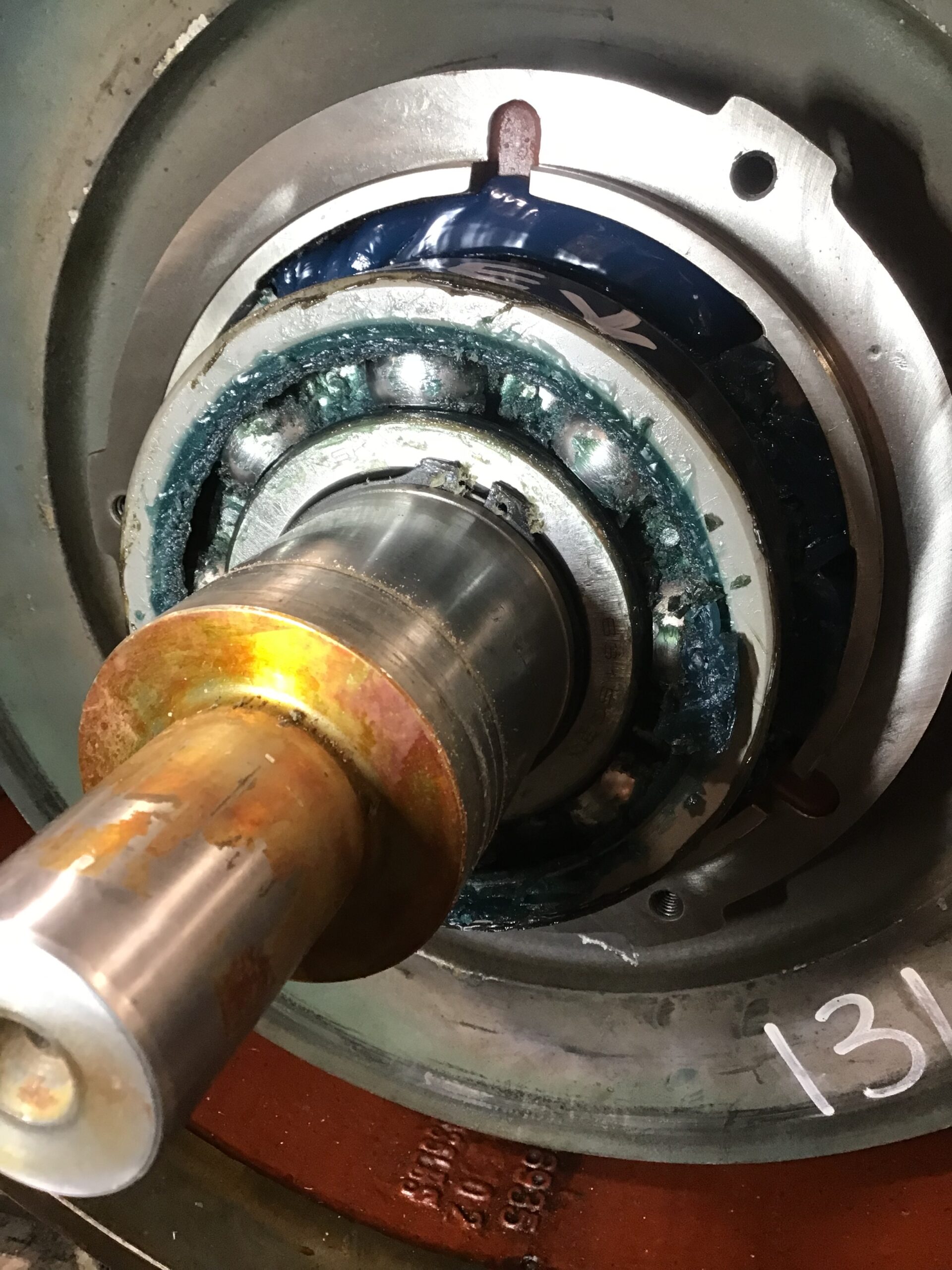
The early detection and prevention of catastrophic bearing failures alone has justified the existence of predictive maintenance departments within industrial facilities.  For this Decatur Industrial customer, ongoing mechanical bearing failures in the same dryer section of their equipment was a reoccurring problem.

Our experts were brought in to work with the customer’s electrical team to evaluate the motors in the dryer section where they were seeing premature bearing failures.  We were able to identify a bearing failure during a vibration analysis on a critical piece of equipment. It would have eventually progressed and caused an unplanned shutdown.

By identifying the failure early, we prevented a catastrophic failure that would have led to a costly repair or replacement along with associated downtime cost. Instead, we performed a more “routine” repair allowing the customer to get up and running in the most cost-effective way with planned downtime.

Click on individual images to enlarge.

Filed Under: General News, TCO - Case Study

Webinar Opportunity: Thursday, February 20th!

Customers – join us for this no-charge webinar event. Register here!


Flyer

Filed Under: General News, Training and Events

Routine Preventative Maintenance Saves Customer over $30,000

We get it. Preventative maintenance is costly – both in manpower and hard dollars. However, the cost of NOT doing it can be extremely more expensive.

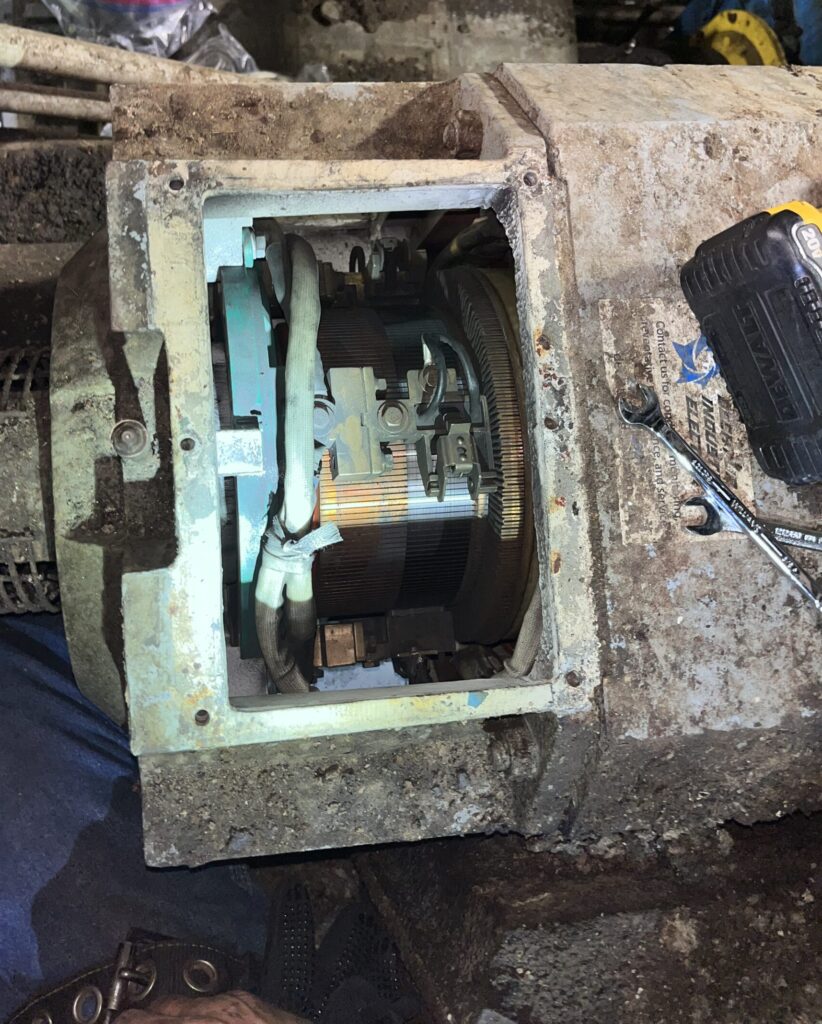
During a scheduled preventative maintenance call at a customer site, a Decatur Industrial technician was inspecting a DC motor for brush wear, condition of the brush springs, and the state of the commutator. The commutator had extensive wear in the brush path. The brushes facilitate the flow of current into the armature so when excessive wear occurs, the motor has a more difficult time maintaining speed and output.

The commutator had a row that was not being used so we removed the spacer to adjust the brush holders onto a new brush path. This allowed the customer to continue using the motor and prevent it being pulled for reconditioning at a cost of $35,000.

Filed Under: General News, TCO - Case Study

  • « Previous Page
  • 1
  • 2
  • 3
  • 4
  • …
  • 16
  • Next Page »

Archives

  • February 2026
  • October 2025
  • August 2025
  • June 2025
  • May 2025
  • April 2025
  • March 2025
  • February 2025
  • January 2025
  • November 2024
  • August 2024
  • June 2024
  • May 2024
  • April 2024
  • March 2024
  • January 2024
  • November 2023
  • October 2023
  • September 2023
  • August 2023
  • June 2023
  • May 2023
  • April 2023
  • February 2023
  • January 2023
  • December 2022
  • November 2022
  • October 2022
  • August 2022
  • July 2022
  • June 2022
  • May 2022
  • April 2022
  • March 2022
  • February 2022
  • January 2022
  • December 2021
  • November 2021
  • October 2021
  • September 2021
  • August 2021
  • July 2021
  • June 2021
  • April 2021
  • March 2021
  • February 2021
  • January 2021
  • December 2020
  • November 2020
  • October 2020
  • September 2020
  • August 2020
  • July 2020
  • June 2020
  • May 2020
  • April 2020
  • March 2020
  • February 2020
  • January 2020
  • December 2019
  • November 2019
  • October 2019
  • September 2019
  • August 2019
  • July 2019
  • June 2019
  • May 2019
  • April 2019
  • March 2019
  • February 2019
  • January 2019
  • December 2018
  • November 2018
  • October 2018
  • September 2018
  • August 2018
  • July 2018
  • June 2018
  • May 2018
  • April 2018
  • March 2018
  • February 2018
  • January 2018
  • December 2017
  • November 2017
  • October 2017
  • September 2017
  • August 2017
  • July 2017
  • May 2017
  • April 2017
  • March 2017
  • February 2017
  • January 2017
  • December 2016
  • November 2016
  • October 2016
  • September 2016
  • August 2016
  • July 2016
  • June 2016
  • May 2016
  • April 2016
  • March 2016
  • January 2016
  • December 2014
  • November 2014

Copyright © 2026 Decatur Industrial Electric - 217-428-6621