• About
    • Our Team
    • Location
    • Industry Case Studies
    • Mission & Values
    • Corporate Responsibility
    • Vendor Management
    • History
    • Contact
  • Industries
    • Agribusiness
    • Food & Beverage
    • Metals & Steel
    • Mining, Aggregate, & Concrete
    • Oil & Gas
    • Paper
    • Power Generation & Energy
    • Water & Wastewater
    • Wind Services
  • Products
    • Type
    • Manufacturers
    • Asset Management Program
  • Generators
  • Remanufacture
    • Electrical Repairs
    • Mechanical Repairs
    • Machining
  • Field Services
    • All Services
    • Installation and Commissioning
    • Overhead Crane & Hoist Services
    • Wireless Equipment Condition Monitoring IoT
    • Predictive & Preventative
      • Vibration Analysis
      • On-Site Electrical Testing
      • Large AC and DC Motor PM and Repair
      • Gear Reducers
      • Precision Laser Alignment
  • Asset Management
    • Asset Management Program
    • Transport & Logistics
  • Careers
  • Login

Decatur Industrial Electric

Contact Us

Service & Quotes: 217-428-6621

Save the Date: March 15, 2018, EASA Workshop

Class: Root Cause: Winding & Rotor Failures / Root Cause: Bearing & Shaft Failures
Download the Flyer

Cost: $300 per person or $275 per person if 2+ attendees from same company
Time: 8 AM to 5 PM CST (lunch will be provided)
Where: Decatur Industrial Electric / 1650 E. Garfield Ave. / Decatur, IL 62526

One of the most important factors to consider when repairing motors is to understand why they failed. This seminar will focus on common as well as unusual types of failures broken down by components.This class is intended for anyone interested in understanding motor failures & addressing the root cause of failure rather than the symptom.

RSVP Options:

  • Tell your D.I.E. Account Manager to “Sign me up!”
  •  call 217-428-6621 and ask for Kelli

Taught by: Jim Bryan, EASA Instructor  

Jim Bryan is a technical support specialist with the Electrical Apparatus Service Association (EASA). Before joining EASA, Bryan worked for more than 20 years at Emerson Motor Company (Nidec Corporation) in St. Louis
Filed Under: Training and Events

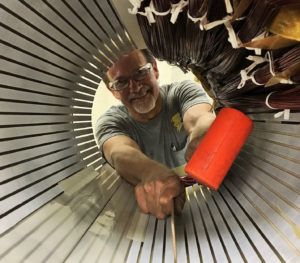
Meet Brian Buchanan, Winding Leadman

“Even with certain rules and constraints of each job, I can still find ways to take artistic license and really put my mark on a job.” – BrianĀ Brian Buchanan

Brian has been with D.I.E. since June of 2014. Another aspect of his job he enjoys is mentoring newer employees. When he isn’t at work, Brian spends much of his free time with his four grand-kids.

Fun Fact: Brian and his wife have quite the collection of animals! The “Buchanan Zoo” has 20 zebra and society finches, three dogs, two cats, a guinea pig andĀ  hamster.

Filed Under: Employee Higlights

Justification or Nullification

Yes, another tip on justification. At every reliability conference you will hear at least one story where a reliability program is struggling to justify their existence. In one presentation it’s world class performance backed by management and everyone is motivated and every maintenance dollar is linked to a return. Cross the hallway to another presentation and hear about a struggling facility with a “what have you done for me lately” management support, reliability technology used for troubleshooting only, and a poor taste in the mouth of the technician tasked to keep the equipment reliable.

Justification of finds and downtime prevention is very important when you are part of a reliability effort with an existing management team that has been around for a few years. The importance of justification increases to critical when a management change is under way. Don’t wait. Create a basic template for case studies that can be easily documented and shared with existing and new management to prevent the nullification of the reliability effort. Find ways to get management involved in looking at the KPI’s collected such as integrating reliability data into asset management software for dashboard review or ensuring all the technology data acquired can communicate with the latest IOT data analytics package that new management will likely be interested in. New management will be looking for cost cutting opportunities. Case studies to justify a program don’t come every day and take time to collect. Gather accurate information and document finds when the reliability support is good, so you don’t have to jump through hoops to try to save your program when the support is not.

For a look at a variety of case study examples visit our website at http://www.pdma.com/PdMA-case-study.php.

Filed Under: Electric Motors

The Five Whys of Equipment Failure

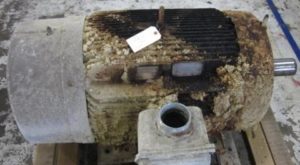
The five whys refers to the practice of asking five times why a motor failure occurred in order to get closer to the root cause of the problem. Failure to determine the root cause can result in treating the symptoms of the problem instead of its cause, in which case you will continue to have the same problems over and over again.

  1. Why did the motor fail? It shorted to ground.
  2. Why did it short to ground? The ground wall insulation failed.
  3. Why did the ground wall insulation fail? The insulation overheated.
  4. Why did the insulation overheat? Excessive ambient temperature.
  5. Why was the ambient temperature so high? The cooling fan motor was not operating correctly.

Just replacing the motor would not solve the cooling fan problem and the new motor would be in the same high risk environment.

Filed Under: General News

Commutator Wear? D.I.E. can Help with the CL-Profiler

CL Profiler

The CL-Profiler is the perfect solution for profiling slip ring assemblies and commutators.

This tool can be used during the repair process and also in the field during DC motor PM’s in order to have a baseline; or, as a troubleshooting tool for aggravated commutator and brush wear. It can also be used annually in order to check for trending for commutator looseness, wear, vibration, and contamination influences.


Filed Under: Uncategorized

  • « Previous Page
  • 1
  • …
  • 27
  • 28
  • 29
  • 30
  • 31
  • …
  • 39
  • Next Page »

Archives

  • March 2026
  • February 2026
  • October 2025
  • August 2025
  • June 2025
  • May 2025
  • April 2025
  • March 2025
  • February 2025
  • January 2025
  • November 2024
  • August 2024
  • June 2024
  • May 2024
  • April 2024
  • March 2024
  • January 2024
  • November 2023
  • October 2023
  • September 2023
  • August 2023
  • June 2023
  • May 2023
  • April 2023
  • February 2023
  • January 2023
  • December 2022
  • November 2022
  • October 2022
  • August 2022
  • July 2022
  • June 2022
  • May 2022
  • April 2022
  • March 2022
  • February 2022
  • January 2022
  • December 2021
  • November 2021
  • October 2021
  • September 2021
  • August 2021
  • July 2021
  • June 2021
  • April 2021
  • March 2021
  • February 2021
  • January 2021
  • December 2020
  • November 2020
  • October 2020
  • September 2020
  • August 2020
  • July 2020
  • June 2020
  • May 2020
  • April 2020
  • March 2020
  • February 2020
  • January 2020
  • December 2019
  • November 2019
  • October 2019
  • September 2019
  • August 2019
  • July 2019
  • June 2019
  • May 2019
  • April 2019
  • March 2019
  • February 2019
  • January 2019
  • December 2018
  • November 2018
  • October 2018
  • September 2018
  • August 2018
  • July 2018
  • June 2018
  • May 2018
  • April 2018
  • March 2018
  • February 2018
  • January 2018
  • December 2017
  • November 2017
  • October 2017
  • September 2017
  • August 2017
  • July 2017
  • May 2017
  • April 2017
  • March 2017
  • February 2017
  • January 2017
  • December 2016
  • November 2016
  • October 2016
  • September 2016
  • August 2016
  • July 2016
  • June 2016
  • May 2016
  • April 2016
  • March 2016
  • January 2016
  • December 2014
  • November 2014

Copyright © 2026 Decatur Industrial Electric - 217-428-6621